
As an adjunct faculty member, a “special instructor”, I sometimes teach pre-service teachers at BYU-Hawaii how to teach science to children. BYU-H is a culturally diverse campus with students from many different countries. I like to use this linguistic diversity to help students learn how to teach second language learners. At the end of the semester, I have each student present a five minute explanation of a science concept, in their native language (or a second language, if they are native English speakers who have fluency in a second language). At least half of the presentations end up being in a language other than English. Students quickly learn how difficult it is to understand topics when you don’t understand the language of instruction, and I hope that this gives them empathy for their future second language learners. Each year a few students shine in this assignment, despite the language barrier, and I believe the students learn more about how to reach second language learners from their classmates’ successful presentations than they ever could from a lecture on teaching second language learners.
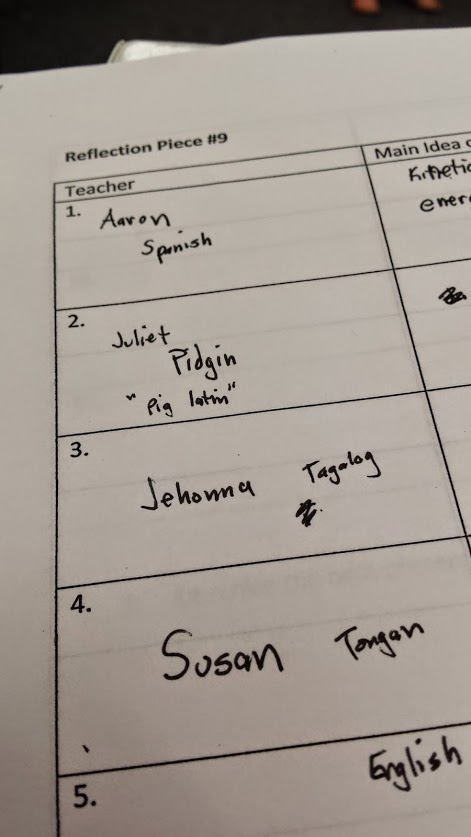
This year, before we heard any English presentations, we had a Spanish presentation on kinetic and potential energy, a presentation on temperature and molecular movement in a Fijian version of “pig latin” (it was introduced as pidgin, but it wasn’t an actual pidgin language), a Tagalog presentation on the reflectivity of light, and a lesson in Tongan about the reason for different temperatures during the day and the night. It was enjoyable and eye-opening.
 Our Joyful Journeys